Root Canal Treatment
A tooth-saving procedure that removes infected pulp and relieves pain. Modern techniques make this common treatment comfortable and highly effective.
Price on consultation
Professional dental care with exceptional results
About This Service
You might need a root canal if you experience any of the following symptoms:
Severe toothache: The pain may be constant or intermittent and can worsen when chewing or applying pressure.
Sensitivity: Lingering pain after exposure to hot or cold foods or drinks.
Swollen or tender gums: The gums around the affected tooth may be swollen, red, or tender.
Darkening of the tooth: The tooth may appear darker than surrounding teeth.
Pimple on the gums: A small, pimple-like bump may appear near the affected tooth.
Deep tooth decay: When decay reaches the pulp, bacteria can cause an infection.
Cracked or chipped tooth: This can allow bacteria to enter the pulp.
Repeated dental procedures: Multiple fillings or crowns on the same tooth can irritate the pulp.
Trauma: A blow to the tooth can injure the pulp, even if the tooth doesn't look damaged.
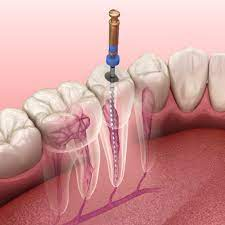
The procedure is a multi-step process that a dentist performs to treat the infected tooth:
X-rays: The dentist will take X-rays to assess the extent of the damage and the shape of the root canals.
Anesthesia: Local anesthesia is administered to numb the area around the tooth, ensuring the procedure is comfortable.
Access: A small opening is made in the crown of the tooth to access the pulp chamber.
Pulp removal: The infected or damaged pulp is carefully removed.
Cleaning and shaping: The root canals are thoroughly cleaned and shaped to prepare them for filling.
Filling: The canals are filled with a biocompatible material, most often gutta-percha, to seal them and prevent re-infection.
Sealing: A temporary filling is placed to seal the opening in the tooth.
Crown: In most cases, a crown is placed over the tooth to restore its strength, function, and appearance.
Root canal treatment offers significant benefits:
Saves your natural tooth: Keeping your natural tooth is always the best option for your oral health.
Relieves pain: The procedure eliminates the pain caused by the infected tooth.
Improves oral health: By removing the infection, a root canal prevents its spread to other teeth and surrounding tissues.
Restores function: The treatment allows you to chew and bite normally on the affected tooth.
Improves appearance: A crown placed after the procedure can improve the tooth's look.
After your treatment, follow these guidelines for a smooth recovery:
Avoid chewing on hard foods: Do this until the permanent crown is placed to protect the treated tooth.
Practice good oral hygiene: Regularly brush and floss to keep your teeth and gums healthy.
See your dentist for follow-up: Be sure to schedule follow-up appointments to ensure the tooth is healing properly and to get your permanent crown placed.
Root Canal Treatment in Nairobi: Treatment, Cost, Benefits & Recovery
Looking for root canal treatment in Nairobi? Our team at Gottel Dental Center provides tailored restorative dentistry care with modern diagnostics, patient-focused planning, and clear pricing guidance. We support patients from Nairobi CBD, Westlands, Kilimani, Karen, and nearby areas who want dependable, long-term dental outcomes.
During your consultation, we assess your oral health, explain procedure options, discuss treatment timelines, and answer common questions about aftercare and expected results. If you are comparing providers for quality, affordability, and experience, this page is designed to help you make an informed decision before booking.
Ready to Get Started?
Call Us
0704477100 / 0789308179
info@gotteldentalcenter.com
Location
Kenwood Hse, Kimathi Street 4th Flr
Quick Booking
Ready for your consultation?
Book a personalized appointment and get a clear treatment plan from our dental team.
Frequently Asked Questions
Get answers to common questions
Still have questions?
Our team is here to help you with any additional concerns.